
Find Out Who Owns a Switzerland County Property
Start with the land itself. A shared name proves nothing. Switzerland County stores parcel facts and recorded instruments in separate systems, so one result should feed the next instead of standing alone. Keep the parcel number and legal description beside every owner name you collect.
- Enter the situs address in Switzerland County WTHGIS and select the matching parcel.
- Copy the owner field exactly, along with the parcel number, mailing address, property address, legal description, and any transfer date shown.
- Search that owner as a grantee in the Doxpop recorded-document index, then match the newest deed by parcel or legal description.
- When a company owns the land, check the entity name in the Indiana Business Search without treating an agent as the property owner.
A stale tax-roll name is common. The latest recorded deed usually fixes it. The assessment card supplies the best bridge from a modern street address to the legal record, and for a closer look at the present-name field, the current Switzerland County owner guide goes further.
Where Switzerland County Property Ownership Appears
No single screen settles ownership. The map finds the parcel, the assessment roll lists an administrative owner, and the recorded instrument proves the conveyance. Their dates can disagree after a closing.
| Ownership source | What it contributes | How to reach it |
|---|---|---|
| WTHGIS parcel card | Assessment owner, mailing and situs clues, parcel key, values, and transfer fields when available | Public web map, no login observed |
| Recorder deed index | Grantee, grantor, instrument type, recording date, book/page or public ID, and legal description | Doxpop index; Recorder for the official copy |
| Auditor records | Ownership and assessed-value plats, tax duplicate, transfers, and certified property-owner records | Office request or inspection |
| Indiana entity record | Status and filing details for an LLC or other business named on the parcel | Public Secretary of State search |
A mailing address only shows where tax notices go. It does not prove who lives there, and an entity's registered agent is not automatically its landowner.
Read Switzerland County Owner Names Without Rewriting Them
The Switzerland County Assessor runs the assessment work behind each parcel record. Copy the owner entry exactly as shown. Keep every punctuation mark, entity ending, and trust phrase. Keep terms such as “et al.” too. A tidied name can hide the text the recorder index actually searches.
Write down the property address, owner mailing address, parcel number, and assessment year whenever those fields appear. Include the legal description, transfer date, grantor, grantee, and sale clue. Field labels vary between county systems, so rely on the labels shown. An invented substitute only causes errors.
Open the county parcel and owner interface first.
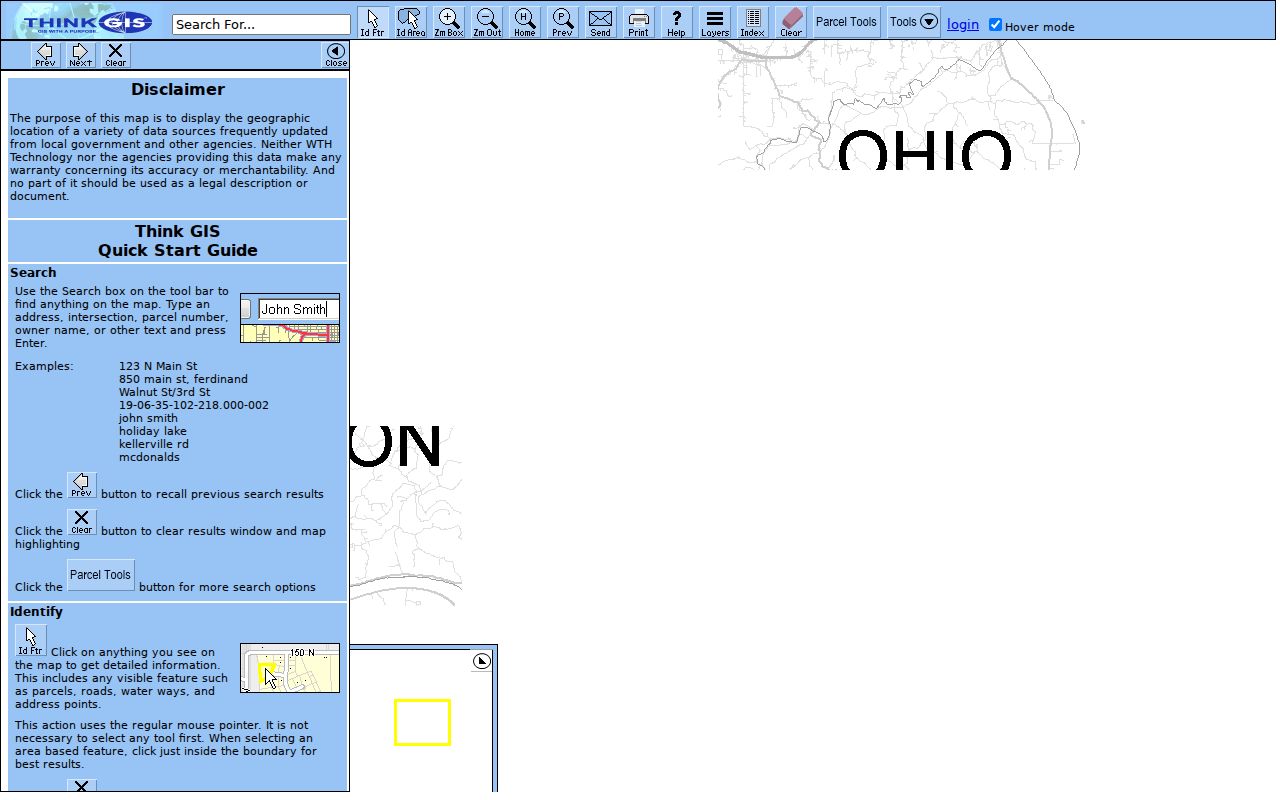
The parcel screen begins the address-to-owner route. The Recorder still controls the instrument that settles title.
Note: A parcel card name is an assessment field, so reproduce it faithfully and verify it against the newest deed.
Trace Switzerland County Ownership Through Four Dates
Compare four dates to test currentness. Check the deed recording date. Check the assessment year tied to the owner field. Add the latest tax notice or payment date and the date you viewed the GIS result; a court filing date helps when title litigation matters. These systems belong to different offices and need not update together.
| Recorded date | Shows when the Recorder accepted the instrument. |
|---|---|
| Assessment year | Frames the owner and value fields on the administrative roll. |
| Tax record date | Shows the installment, notice, or payment period being viewed. |
| Access date | Documents when the vendor or GIS screen was checked. |
Dates that disagree deserve a question. Report the mismatch to the responsible office, and never force several snapshots into one false “as of” date.
Identify an LLC, Trust, or Estate Owner in Switzerland County
The owner of record may be an entity. A company, trust, estate, or public body can hold the parcel. Search the exact name first. Try abbreviations only if that fails. For a business, the state entity record confirms the company exists and shows its filings, though it neither transfers the parcel nor makes the registered agent the deed holder.
- Owner of record
- The party displayed in the administrative or recorded source being consulted.
- Grantee
- The party receiving an interest on a deed; the newest matching deed is the key confirmation step.
- Situs address
- The location of the land, which can differ from the address used for owner mail.
- Title
- The legal rights in the property, which cannot be certified by a tax card or vendor index alone.
Trust and estate names need care. Record the exact wording rather than guessing at heirs. Probate filings and later deeds can explain a transfer, though some sealed or protected material may never appear online.
Take a Switzerland County Property Owner Result to the Recorder
The Switzerland County Recorder at 212 W Main Street in Vevay keeps deeds and other permanent instruments. The office performs no searches. It gives no legal advice. A good request therefore names the document rather than asking staff to decide who owns the land.
Bring the parcel or legal description, party names, approximate date, instrument type, and book/page or public ID if known, and say whether you want inspection or an uncertified or certified copy. Inspection is generally free. The Recorder publishes its copy and certification charges. Call 812-427-4460 to confirm payment and retrieval details before mailing.
The public index starts in January 1999. Images begin in February 2003. Older ownership evidence lives in courthouse holdings or State Library microfilm rather than ending at an empty web result.
When a Switzerland County Owner Address Is Restricted
Indiana law can hide addresses. The state Address Confidentiality Program gives eligible participants substitute addresses. IC 36-1-8.5 adds assessment-address restrictions for covered people. None of that leaves a parcel without an owner. Keep going through the visible land identifiers. Use the parcel number, legal description, instrument number, and recorded deed. Do not defeat a protection by merging unrelated personal databases. If authorized access is required, ask the custodian what process applies. Accept that some information stays confidential.
Note: Address protection changes a public display; it does not erase the deed or justify searching around the restriction.
Know What a Switzerland County Ownership Lookup Cannot Prove
A name on a parcel card is a lead. It is not proof of clean title. The deed itself may hide co-owners, life estates, easements, exceptions, or corrective language that no online parcel record will ever display. A shape drawn on a GIS map falls short too, since the recorded legal description, not the polygon, controls what was conveyed. For a purchase, an estate, a disputed boundary, or a lien question, pull the official instrument from the recorder and bring in professional help before relying on any owner of record you found in a Switzerland County property search.
Use the result with care. An owner lookup supports lawful property research and due diligence. Using public information to stalk, harass, intimidate, or harm a person is prohibited.
The lookup ends where real legal work begins. A title opinion, protected-address access, estate interpretation, or boundary survey cannot be replaced by another round of deed-record name searching.